
Doyle Ordinance Questions Begin With the Town
Doyle is an incorporated town, but its inspected municipal code does not establish an active town court. Title 3, Municipal Court, is reserved. A separate code provision assigns ordinance enforcement to the White County Sheriff under an agreement involving the town and county. That makes the ordinance record route different from Sparta’s city-court process.
The town should identify whether a question concerns a Doyle ordinance, a sheriff enforcement action, or a case filed in White County court. A general county warrant search will not necessarily identify an ordinance record held locally.
The MTAS Doyle profile links to the inspected code and local-government details.
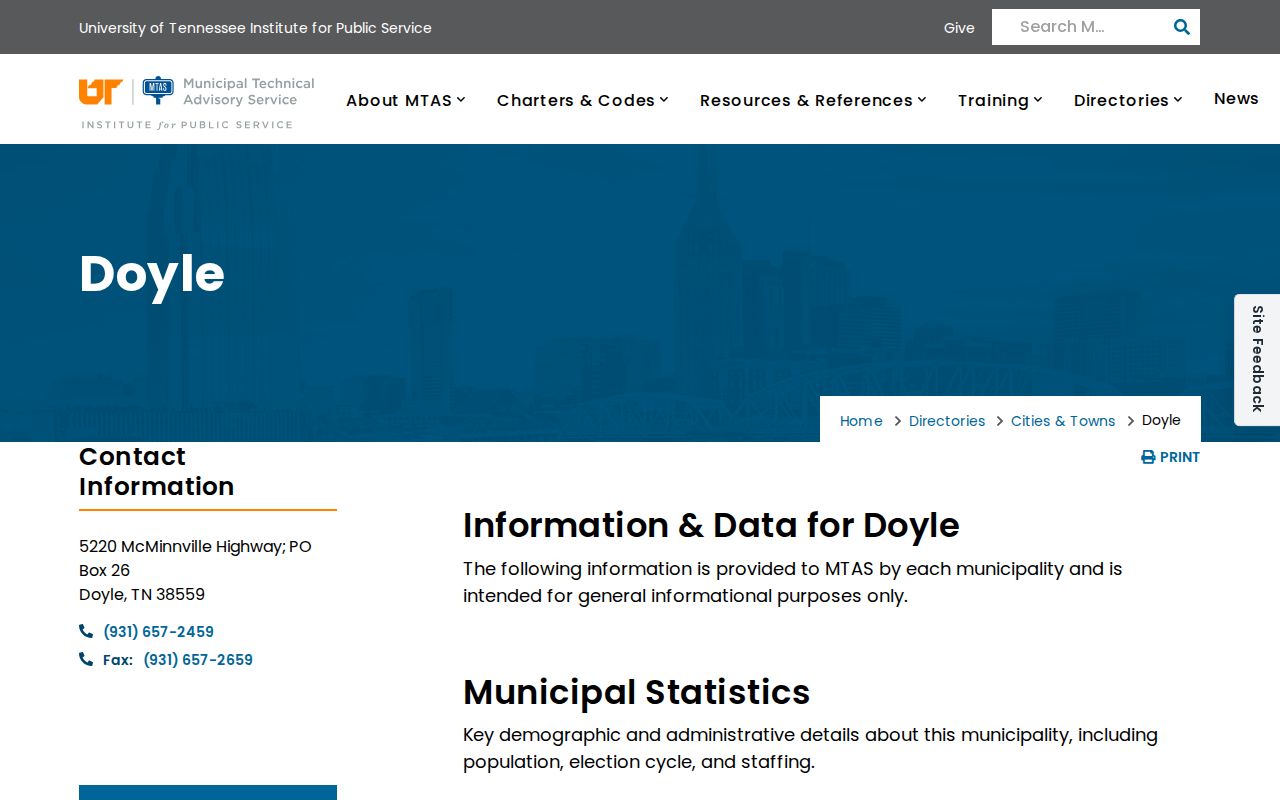
Start with the town’s own code and ask which office holds the specific document.
Checking Doyle Ordinance Records
Doyle does not advertise a warrant list, online court portal, or ticket-payment search in the sources reviewed. Use the case paper to identify the allegation and date, then contact the town to ask whether it is a Doyle ordinance matter and where the record is maintained. The sheriff agreement governs enforcement, while a county court docket is relevant only if a court case was filed.
- Record the citation, ordinance section, date, and any case number from your own notice.
- Ask the Town of Doyle which office holds the ordinance record; no town warrant portal was found.
- For sheriff enforcement or service routing, call the White County Sheriff using the official county contact.
- If a General Sessions or other court case exists, ask the Circuit Court Clerk which docket category applies.
- Confirm status with the record holder and consult Tennessee counsel about any appearance or surrender.
Doyle Has No Public Town Warrant Search
The inspected Doyle profile links to the town’s charter and code; it does not link to a local warrant roster, municipal-court portal, or online ticket account. The code’s reserved municipal-court title supports a different starting point from a city with its own court, but the town can still hold ordinances, agreements, and administrative records.
Ask the town whether a public record exists before looking at county systems. If it refers the matter to the sheriff or a court, request that office’s case number and contact details so the inquiry follows the correct record.
See the county Sheriff’s Office contact page for enforcement routing.
Doyle Enforcement Runs Through County Offices
Doyle’s code says the White County Sheriff’s Department enforces town ordinances under an agreement. It does not describe a Doyle police department warrant desk or an operating municipal court. The Sheriff’s Office is the law-enforcement contact for service questions; the Circuit Court Clerk routes county case and docket questions when a matter has reached court.
These offices hold different records. Ask the town whether the issue is a Doyle ordinance, then use the sheriff or court contact it identifies. The county sheriff’s published office line is 931-836-2700.
Doyle’s Enforcement Agreement Includes General Sessions
The Doyle code describes an agreement among the town, White County, the Sheriff’s Department, and the White County Court of General Sessions for ordinance enforcement. It cites an agreement on file with the town recorder, so an ordinance question may require more than one record holder to explain the path from town code to court process.
When calling, ask whether the matter remains a town ordinance issue, was referred to sheriff enforcement, or now has a General Sessions case number. Do not assume a town ordinance notice is itself a county warrant.
The Doyle code, Title 6, section 6-101, describes the sheriff agreement.
Warrant Routes for Doyle Cases
“Doyle warrant” can refer informally to different processes, but the town code does not establish a municipal court that issues them. A citation or ordinance matter may involve local enforcement; a capias or arrest warrant belongs to the court named in the process. Check the document before choosing an office.
| Warrant Type | How It Arises | Who Issues It |
|---|---|---|
| Doyle ordinance matter | Alleged violation of town code | Town identifies record; sheriff enforces under agreement |
| Traffic citation | Town or county notice with a cited court | Use the court printed on the citation |
| Bench warrant / capias | Existing court case or missed court obligation | Judge of the named issuing court |
| Arrest warrant | Criminal process after judicial review | Judge or magistrate shown on the order |
Doyle Code Title Three Is Reserved
The MTAS version of Doyle’s code displays Title 3, “Municipal Court,” as reserved. Its table of contents still lists municipal offenses and motor-vehicle rules elsewhere, so the town may have ordinance records even though the inspected code does not name an operating city court. Ask Doyle which current provision applies rather than assuming a court exists because the title appears in the contents.
The profile reports that this code was last updated July 17, 2003. Later ordinances or agreements may affect current practice, so use the code as a lead and request confirmation from the town or sheriff.
The date and reserved title appear in the Doyle profile and code index.
Details to Request for a Doyle Case
Doyle does not expose a warrant-record form online. If the town, sheriff, or clerk locates a file, ask which document records the ordinance, citation, court referral, or later process. A case number, date, town-code section, and named office help distinguish a town enforcement record from a White County court docket.
| Case or citation | No Doyle warrant format published; quote the identifier on your notice. |
|---|---|
| Town-code section | Ask for the cited title and section, if the matter alleges an ordinance violation. |
| Record holder | Confirm Town of Doyle, White County Sheriff, or the named court. |
| Order or return | Ask whether a court issued process and whether an officer filed a return. |
| Current action | Verify whether a hearing, referral, or later order changed the case. |
Doyle Code Titles Identify Record Subjects
The inspected Doyle code places police and arrest provisions in Title 6, municipal offenses in Title 11, and motor vehicles, traffic, and parking in Title 15. These headings can help a resident describe the ordinance or citation to the town, but they do not reveal whether an individual court warrant exists.
Give the custodian the title or section printed on the notice and ask whether an amended ordinance now controls. The town’s code can help identify the subject matter; the enforcement agreement determines which office to contact next.
Review the Doyle municipal code contents and sections.
Doyle Matters in White County
A Doyle ordinance matter follows the town’s sheriff-enforcement agreement; a separate county charge or capias belongs to its issuing court. The county sheriff and Circuit Court Clerk answer distinct service and case-record questions, and no public statewide warrant search was found. For another county matter, use White County warrant records and the county warrant-check steps after identifying the court on your own paperwork.
Warrant flow: Town of Doyle identifies ordinance record › White County Sheriff enforces under agreement › General Sessions or other court controls its own process.
Ask Doyle Where an Ordinance Record Is Kept
The MTAS Doyle profile currently lists town-office hours on Mondays and Fridays and a regular monthly meeting at Town Hall. These profile details give a resident a town-level contact path, but schedules can change; verify current availability before visiting. Ask the town whether its recorder holds the ordinance, agreement, or referral record you need.
If the town directs you to the Sheriff’s Office or General Sessions, note the name of that office and ask for the record number. The aim is to locate the existing file, not to request a new list of all warrants.
See the Doyle municipal profile for current contact and meeting details.
Public Access to Doyle Records and Court Process
A request for a Doyle ordinance record goes to the office holding the document. The Tennessee Public Records Act governs access to existing public municipal records, subject to exceptions. If a case has become a court file, Rule 34 and any confidentiality rule also apply. Juvenile Rule 114 limits access to specified juvenile and family proceedings. Ask whether a record is public, redacted, or sealed before sharing it.
Key Rules:
Tennessee Public Records Act - governs inspection of existing public records held by town offices, subject to exceptions.
Tennessee Supreme Court Rule 34 - provides the court-record access framework and exceptions.
Tennessee Juvenile Rule 114 - restricts access to certain juvenile and family records.